
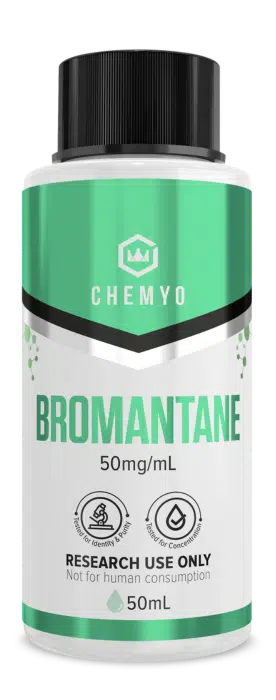
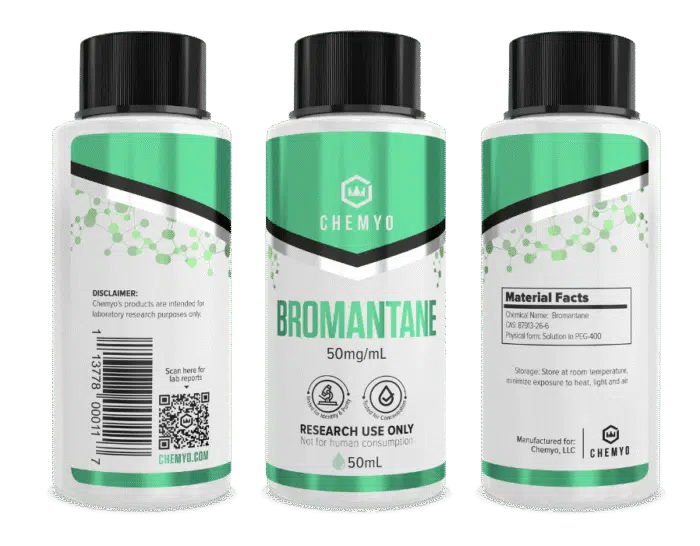

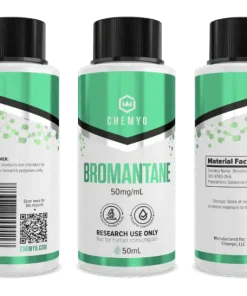
Bromantane Solution 50mg/ml – 50ml
| Application | Actoprotector / Dopamine and serotonin modulator |
| Concentration | 5% (50mg/ml) |
| Composition | 95% PEG 400, 5% Bromantane (>99% purity) |
| CAS | 87913-26-6 |
| Molar Mass | 301.24 g/mol |
| Chemical Formula | C16H20BrN |
| Synonyms | Bromantane, Ladasten, N-(4-bromophenyl)adamantan-2-amine |
| Storage | Minimize open air exposure, store in a cool dry place |
| Terms | For laboratory research use only. Not for human or animal consumption. |
What Is Bromantane?
Bromantane (Ladasten) is an actoprotector — a class of compounds that enhance physical performance under extreme conditions without the stimulatory side effects of classical psychostimulants. Originally developed in the Soviet Union for military and athletic applications, Bromantane is classified as an adamantane derivative that modulates both dopaminergic and serotonergic neurotransmission. It was banned by the IOC in 1996 following its discovery in the blood of Russian athletes at the Atlanta Olympics, bringing it into the scientific spotlight as a performance-modulating research compound.
Unlike classical stimulants, Bromantane does not directly block dopamine reuptake or release stored catecholamines. Instead, it stimulates the biosynthesis of dopamine and serotonin by upregulating the expression of tyrosine hydroxylase (TH) and tryptophan hydroxylase (TPH) — the rate-limiting enzymes in their respective synthesis pathways. This mechanism produces a more sustained, non-depleting neurochemical enhancement than amphetamine-class compounds.
Mechanism of Action
Bromantane’s primary mechanism involves induction of aromatic amino acid decarboxylase and rate-limiting biosynthesis enzymes in the catecholamine pathway. The result is increased dopamine availability without direct receptor agonism or transporter inhibition — a mechanistic profile that distinguishes it sharply from both stimulants and conventional nootropics. It also has immunostimulatory properties and anxiolytic effects in animal models without sedation.
Research Applications
- Dopamine biosynthesis: Studies of TH and DOPA decarboxylase upregulation as a non-releasing, non-blocking dopaminergic enhancement mechanism.
- Fatigue resistance: Animal models of extreme exertion and hypoxia; Bromantane maintains work capacity under conditions where stimulants fail.
- Anxiolysis without sedation: Behaviorally active in rodent anxiety models at doses that do not produce sedation or motor impairment.
- Immunostimulation: Enhances phagocytic activity and cytokine production in animal models.
Related Research Compounds
Bromantane’s dopaminergic mechanism complements neurogenic and cholinergic nootropics in multi-mechanism CNS studies. Researchers sometimes combine it with glutamatergic compounds like Noopept or neurogenic agents like NSI-189. For metabolic and circadian comparators, SR9009 and SR9011 target overlapping fatigue and energy pathways through distinct mechanisms.
For laboratory research use only. Not for human or animal consumption.







Reviews
There are no reviews yet.