
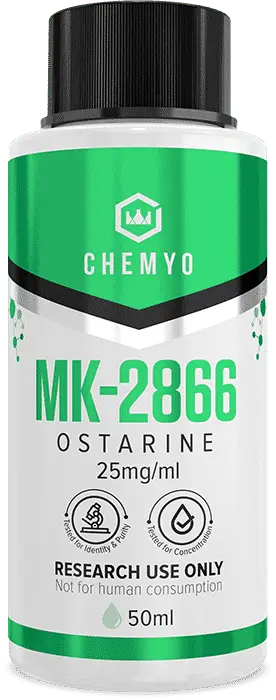

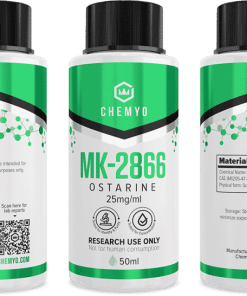
MK2866 | Ostarine MK-2866 SARM Solution 25mg/ml – 50ml
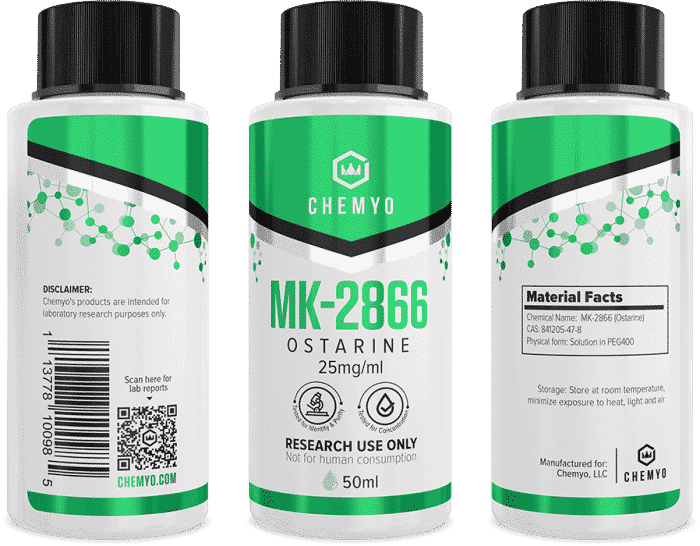
| Application | Selective Androgen Receptor Modulator |
| Concentration | 2.5% (25mg/ml) |
| Composition | 97.5% PEG 400, 2.5% MK-2866 (>99% purity) |
| CAS | 841205-47-8 |
| Molar Mass | 389.33 g/mol |
| Chemical Formula | C19H14F3N3O3 |
| Synonyms | Ostarine, Enobosarm, GTx-024 |
| Storage | Minimize open air exposure, store in a cool dry place |
| Terms | For laboratory research use only. Not for human or animal consumption. |
What Is MK-2866 (Ostarine)?
MK-2866, commonly known as Ostarine or Enobosarm, holds a unique distinction: it is the most clinically studied selective androgen receptor modulator (SARM) ever developed. Created by GTX Inc. and studied across multiple Phase 1, Phase 2, and Phase 3 human trials, Ostarine has generated more human pharmacokinetic and pharmacodynamic data than any other SARM — making it an indispensable reference compound in androgen receptor biology research.
As a non-steroidal partial agonist at the androgen receptor, Ostarine provides a milder anabolic signal compared to full agonists like LGD-4033 or RAD-140, but with proportionally less HPG axis suppression and a well-characterized safety profile across multiple human study populations including elderly men and women, cancer patients, and healthy volunteers.
Mechanism of Action
Ostarine selectively binds the androgen receptor and acts as a tissue-selective partial agonist — activating anabolic gene programs in muscle and bone while producing significantly less androgenic stimulation in tissues like the prostate, skin, and reproductive organs. At 3 mg/day in Phase 1 studies, lean body mass increases of ~1.4 kg were observed over 12 weeks without significant changes in PSA or LH, validating its tissue selectivity at the clinical level.
Human Trial Data Highlights
- Cancer cachexia (ENOBOSARM-1/2): Phase 3 trials in NSCLC patients showed significant lean mass improvements, though the primary functional endpoint was missed.
- Healthy elderly subjects: Phase 2 trials showed dose-dependent lean mass gains, improved stair-climbing power, and maintained bone mineral density.
- Stress urinary incontinence: Phase 2 data showed improvement in pelvic floor muscle function via AR-mediated mechanisms.
Research Context
Ostarine is typically positioned as the “mild” SARM in comparative studies — used alongside Andarine (S4) as an intermediate partial agonist, and RAD-140 or LGD-4033 as high-potency full agonist comparators. For metabolic studies, GW501516 (Cardarine) is commonly added to cover PPARδ-mediated fat oxidation pathways.
Also available in powder format: Ostarine MK-2866 SARM Powder (1g).
Read our full guide: MK-2866 (Ostarine) Research Guide: Clinical Trials, Pharmacology & Comparisons.
For laboratory research use only. Not for human or animal consumption.







Reviews
There are no reviews yet.