

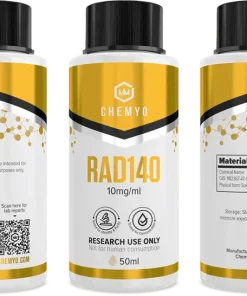
RAD140 | Testolone RAD-140 Solution 10mg/ml – 50ml
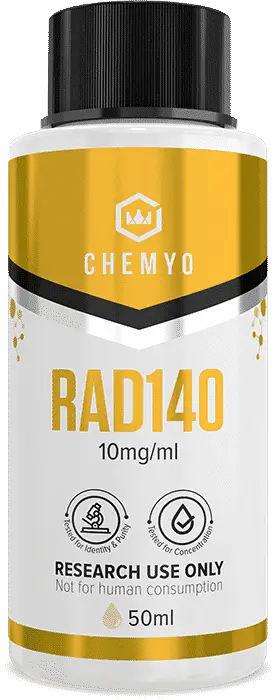
| Application | Selective Androgen Receptor Modulator (SARM) |
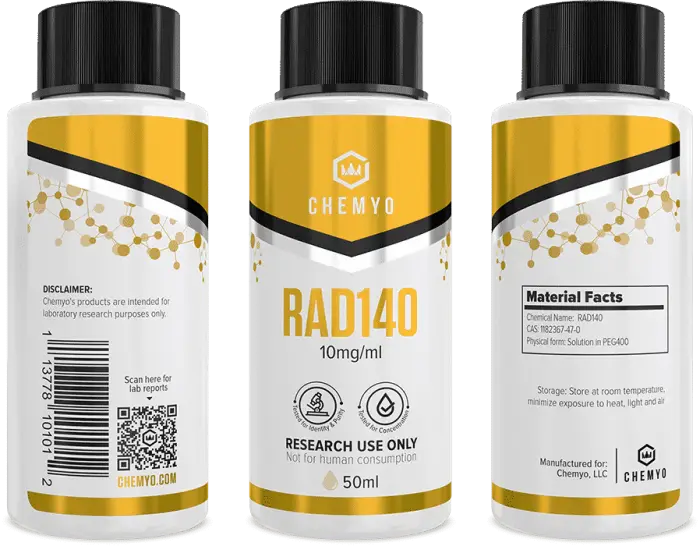
| Concentration | 1% (10mg/ml) |
| Composition | 99% PEG400, 1% RAD140 (>99% purity) |
| CAS | 1182367-47-0 |
| Molar Mass | 393.83 g/mol |
| Chemical Formula | C20H16ClN5O2 |
| Synonyms | RAD140, Testolone |
| Storage | Minimize open air exposure, store in a cool dry place |
| Terms | For laboratory research use only. Not for human or animal consumption. |
What Is RAD-140 (Testolone)?
RAD-140, commonly known as Testolone, is a non-steroidal selective androgen receptor modulator (SARM) originally developed by Radius Health. It is characterized by an exceptional anabolic-to-androgenic ratio estimated above 90:1 in the levator ani model — making it one of the most tissue-selective SARMs characterized to date. RAD-140 acts as a full agonist at the androgen receptor in muscle and bone tissue while demonstrating partial agonist or antagonist activity in prostate tissue, producing potent anabolic signaling with minimal androgenic side effects in preclinical models.
Beyond muscle-wasting applications, RAD-140 has been investigated in Phase 1 trials for ER+/AR+ breast cancer, where its AR agonism may suppress estrogen receptor-driven tumor proliferation — giving it a unique dual research application not shared by most other SARMs.
Mechanism of Action
Upon binding the androgen receptor, RAD-140 induces specific conformational changes that recruit coactivator proteins selectively expressed in muscle and bone. This tissue-selective co-regulator recruitment produces robust downstream anabolic gene expression — promoting protein synthesis, nitrogen retention, and muscle fiber hypertrophy — without activating the same programs in prostate or reproductive tissues that cause androgenic side effects with testosterone.
Research Applications
- Muscle wasting and cachexia: Rodent models demonstrate dose-dependent lean mass gains with minimal prostate stimulation.
- Bone density: RAD-140 stimulates bone formation markers in preclinical studies, with potential application in osteoporosis research.
- Oncology: Phase 1 trial in ER+/AR+ breast cancer patients demonstrated safety and preliminary signals of anti-tumor activity.
- Neuroprotection: Emerging research investigates RAD-140’s neuroprotective properties in models of neurodegeneration.
Comparison to Other SARMs
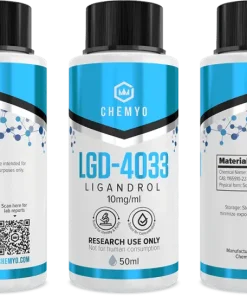
RAD-140 is most commonly compared to LGD-4033 (Ligandrol) for anabolic potency — RAD-140 has higher tissue selectivity while LGD-4033 has more published human pharmacokinetic data. MK-2866 (Ostarine) is the standard “mild” comparator with the largest human dataset overall. For dual-mechanism studies examining both AR and GH/IGF-1 pathway activation, RAD-140 is routinely combined with MK-677 (Ibutamoren). For studies examining anabolic and myostatin inhibition simultaneously, YK-11 is a relevant comparator.
Also available: Testolone RAD-140 SARM Powder (1g) for custom formulation work.
Read our full research guide: RAD-140 (Testolone) Research Guide: Mechanism, Selectivity & Comparisons.
For laboratory research use only. Not for human or animal consumption.





Reviews
There are no reviews yet.